 EN
EN
Smoke Vent Valve
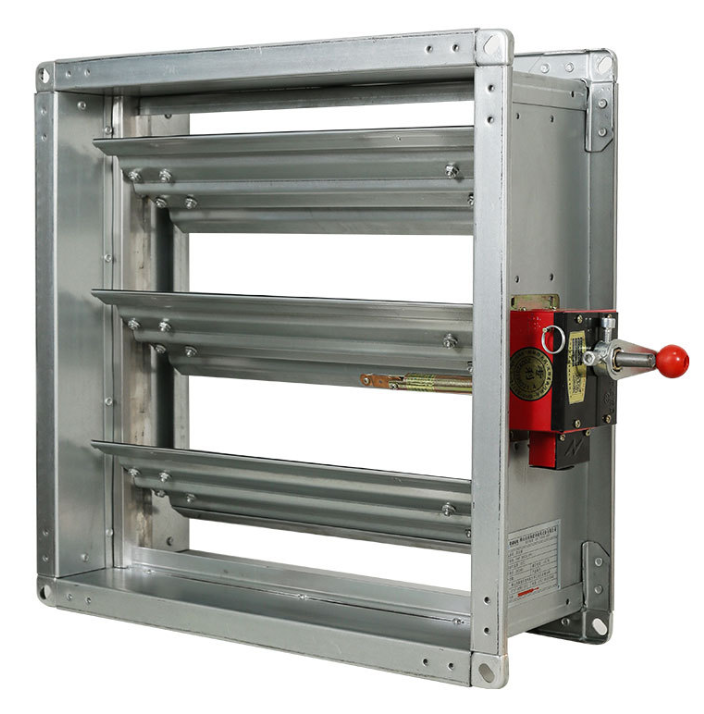
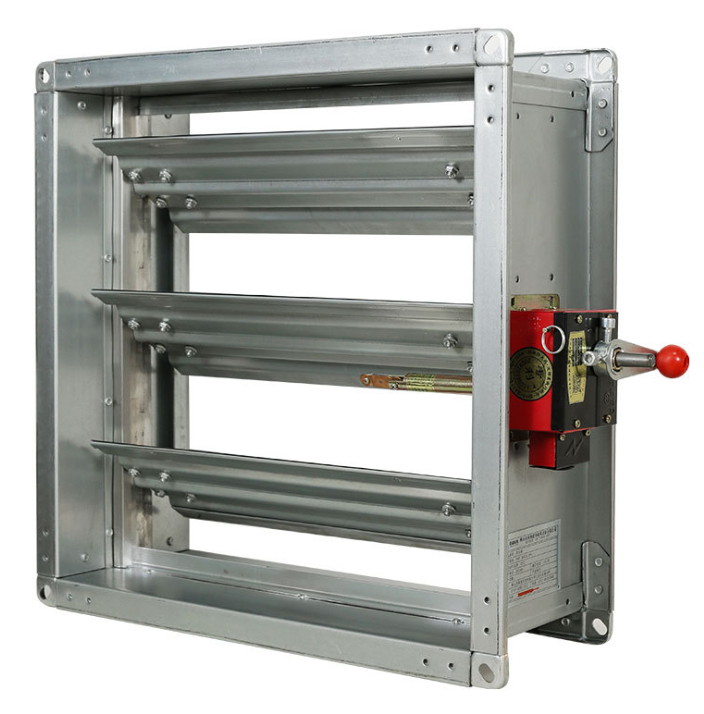
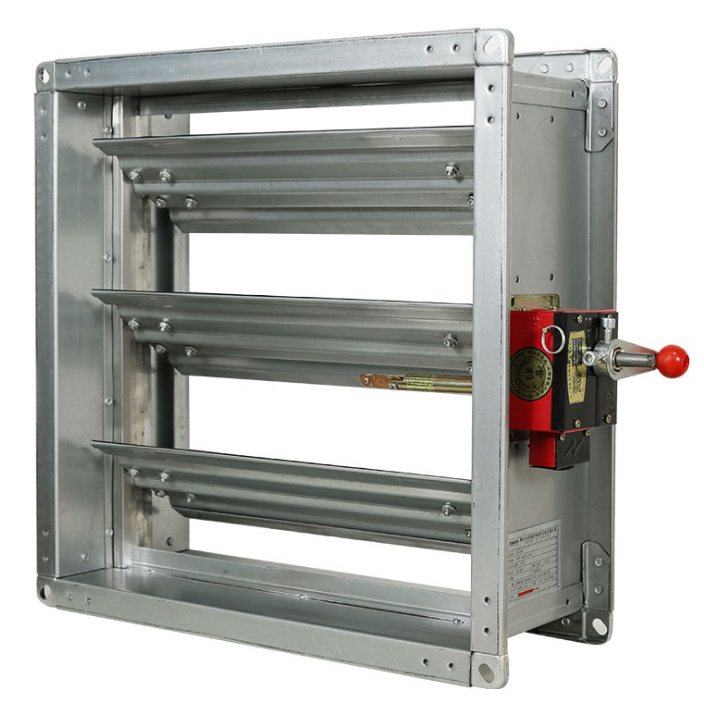
Welcome to our premium Smoke Vent Valve, specially designed for mechanical smoke exhaust systems. The valve is installed at the end of branch ducts or smoke exhaust outlets and remains closed during normal operation. In the event of a fire or when receiving a signal from the fire alarm control system, it opens manually or electrically to discharge smoke rapidly, helping to control smoke spread and improve evacuation safety. Manufactured from high-quality galvanized steel, the valve features excellent sealing performance, reliable operation, and easy maintenance. It is widely used in commercial buildings, underground parking garages, hospitals, schools, and public facilities.
- Overview
- Recommended Products
Rapid Smoke Exhaust Capability:
When activated by the fire alarm control panel or manual pull station, the valve opens swiftly – typically within seconds – to initiate the immediate extraction of smoke, toxic gases, and heat from the affected zone. This rapid response is critical for maintaining visibility and limiting smoke spread.Reliable Automatic and Manual Control Integration:
The valve is designed for seamless integration with modern fire alarm and building automation systems. The electric actuator can be triggered by a variety of input signals (24V DC, 110V AC, 220V AC, or dry contact) and is equipped with spring-return fail-safe mechanism. Manual operation ensures the valve can be opened even in the event of a complete power failure.Outstanding Air Sealing Performance:
Precision-engineered blade-to-frame sealing minimizes air leakage during normal closed operation. This is essential for maintaining the efficiency of the HVAC system and preventing the migration of smoke into unaffected areas of the building.Durable Galvanized Steel Construction:
Manufactured from heavy-gauge, zinc-coated steel, the valve is built for decades of reliable service. The galvanized finish provides excellent corrosion resistance, ensuring the valve remains operational in the humid and corrosive conditions that can exist in duct systems.Standardized Flange Connection Design:
The valve features industry-standard flange connections that simplify installation into common rectangular duct systems. The flanges include pre-drilled bolt holes and mounting gaskets, allowing for quick and secure installation by HVAC contractors.Extensive Customization Options:
Ventech offers comprehensive customization to meet the specific requirements of each project. Options include custom sizes to fit non-standard duct dimensions, specialized actuators with specific torque and opening time characteristics, alternative control voltages, and corrosion-resistant finishes for aggressive environments.Commercial Buildings and High-Rise Offices:
In office towers, shopping centers, hotels, and mixed-use developments, the smoke vent valve is typically installed at the termination of each smoke exhaust zone. During a fire, these valves open to allow the smoke extraction system to remove smoke from the floor of origin, preventing it from spreading to other floors through vertical shafts and stairwells. This is particularly important in high-rise buildings where evacuation takes significant time.Underground Parking Garages and Basements:
These enclosed spaces present a significant smoke management challenge due to the absence of natural ventilation. Vehicle fires can generate enormous quantities of toxic smoke. The smoke vent valve, connected to a dedicated exhaust system, is critical for extracting this smoke and providing a safe environment for evacuation and fire-fighting operations.Public Buildings and Assembly Occupancies:
Hospitals, schools, universities, airports, railway stations, stadiums, and convention centers all require robust smoke management strategies. In these facilities, the smoke vent valve is often part of a zone-controlled system, where only the valves in the affected zone open, preserving the integrity of smoke barriers and preventing unnecessary smoke spread. In healthcare facilities, protecting smoke-free zones is critical to patient safety.Industrial Facilities and Warehouses:
Factories, processing plants, and large storage warehouses often contain significant fire loads from raw materials, finished goods, or processing chemicals. Smoke vent valves are essential for extracting smoke from these large-volume spaces, maintaining visibility for evacuation and enabling firefighters to locate and attack the fire.Atria and Large Open Spaces:
Theatres, museum atriums, and shopping mall concourses with large open volumes require special attention to smoke management. The smoke vent valve, combined with specialized smoke exhaust systems, is designed to capture the rising smoke plume and exhaust it before it can descend to occupant level.Civil Defense and Critical Infrastructure:
In government buildings, command centers, and infrastructure facilities, smoke vent valves are part of the broader life-safety strategy, ensuring operability during emergency conditions.
The smoke vent valve from Ventech represents the convergence of fire protection engineering and precision manufacturing, creating a device that is both a passive component of the building's ventilation system and an active participant in its life-safety strategy. This fire smoke exhaust damper is specifically designed for installation at the terminal ends of branch ducts or directly at smoke exhaust openings, serving as the controlled release point for smoke during a fire event.
The Critical Role in Fire Safety
In the event of a fire, smoke inhalation is the leading cause of death, not the fire itself. Smoke impairs visibility, disorients occupants, and contains toxic combustion products that can incapacitate in minutes. The smoke vent valve is part of a comprehensive smoke management system designed to address this threat. By creating a dedicated pathway for smoke to exit the building, the system maintains a tenable environment in escape routes and fire-fighting access areas, buying precious time for evacuation and fire suppression operations.
Design Philosophy and Construction
The valve is manufactured from high-quality galvanized steel, a material chosen for its exceptional strength-to-weight ratio, corrosion resistance, and cost-effectiveness. The galvanization process coats the steel with a protective layer of zinc that prevents rust and deterioration even when the valve is exposed to moisture or the corrosive byproducts of combustion.
The construction features a robust blade assembly that rotates on precision bearings or bushings. The blade is designed with aerodynamic efficiency in mind, ensuring that when open, it offers minimal resistance to the flow of smoke and combustion gases. The blade edges are precision-machined to mate with the sealing frame, creating an effective barrier against air leakage when the valve is in its normally closed position.
Sealing Performance and Air Leakage Control
One of the most critical performance parameters for a smoke vent valve is its sealing effectiveness during normal operation. The valve must remain tightly closed to prevent the escape of conditioned air from the building and the ingress of unconditioned air. Ventech achieves this through a combination of precision manufacturing tolerances and the use of high-temperature-resistant sealing materials. The sealing surfaces are configured to create a compression seal that becomes even more effective as the valve is pressed closed by the weight of the blade and the differential pressure across it.
Actuation and Control Systems
The smoke vent valve can be configured with either manual or electric actuation, depending on the requirements of the fire protection system design.
Electric actuation is the most common configuration for modern buildings. The actuator is a spring-return device: during normal operation, the actuator holds the valve closed against the spring force. When the fire alarm system sends an activation signal, the actuator releases, and the spring force drives the valve to the fully open position. This fail-safe design ensures that the valve will open even if there is a loss of electrical power. For systems requiring greater torque or specific opening characteristics, Ventech offers actuators with adjustable spring forces, opening times, and auxiliary switch contacts for remote status indication.
Manual actuation is often provided as a backup or for buildings without sophisticated fire alarm systems. A cable or manual pull-station is used to mechanically release the valve. This can be supplemented with a visual indicator that shows whether the valve is open or closed.
Compliance with International Fire Safety Standards
Ventech designs and manufactures smoke vent valves to meet or exceed the requirements of major international fire safety standards. This includes testing for high-temperature operation (typically 250°C to 300°C for up to two hours), leakage rates, operational reliability, and resistance to corrosion and mechanical stress. Certification from recognized testing laboratories provides assurance of performance and simplifies approval by local building authorities.
| Item | Specification Details |
|---|---|
| Product Type | Smoke Vent Valve |
| Frame Material | High-quality Galvanized Steel |
| Blade Material | Galvanized Steel |
| Actuator | Manual or Electric Actuator (Optional) |
| Installation Method | Flange Connection |
| Opening Method | Manual or Automatic Fire Control Operation |
| Air Leakage Performance | Designed to meet fire protection system requirements |
| Working Medium | Smoke and Air |
| Dimensions | Customizable according to duct size |
The smoke vent valve is an essential component of fire safety systems across a broad spectrum of building types, playing a vital role in protecting lives and property.
The smoke vent valve serves as the active interface between the building's smoke exhaust duct network and the protected spaces, controlling the removal of hazardous combustion products during a fire emergency.
Mechanism of Operation
During normal, non-fire conditions, the valve is held in the closed position by the actuator. The actuator is energized, overcoming the spring force and maintaining the blade in a sealed position against the frame. This ensures that the duct system remains closed to the occupied space, preventing the loss of conditioned air and maintaining the designed air balance of the building.
When a fire is detected by the building's fire alarm system, a signal is sent to the actuator. This signal may be a change in voltage, the opening of a dry contact, or another electrical command. Upon receiving the signal, the actuator de-energizes, releasing the spring mechanism. The powerful spring drives the blade from the fully closed position to the fully open position within seconds. With the valve now open, the mechanical smoke exhaust system (typically powered by a dedicated smoke exhaust fan) draws the smoke, heat, and toxic gases from the occupied space, through the ductwork, and discharges it safely to the outdoors.
Integration with Building Management Systems
The valve can be equipped with auxiliary switches that provide status feedback to the fire alarm control panel or building management system. These switches indicate whether the valve is in the open or closed position, allowing the system to verify that the valve has opened as commanded and to provide visual indication to firefighters and building operators.
Manual Override and Fail-Safe Operation
Every valve includes a manual override feature, enabling firefighters or building maintenance personnel to open the valve manually. This is typically accomplished by pulling a cable or pressing a release mechanism on the actuator. The manual override is essential for testing and for ensuring operability in any scenario.
Importance of High-Temperature Performance
The smoke vent valve must remain operational even when exposed to high temperatures. The valve is designed with clearances that accommodate thermal expansion and with bearings that continue to rotate freely at elevated temperatures. The seals are made from materials that maintain their integrity and sealing force even when exposed to high-temperature combustion gases.
Contribution to Overall Building Fire Safety Strategy
The valve is a key element of a comprehensive fire safety strategy. By enabling the controlled extraction of smoke, the system supports several critical objectives: maintaining tenable conditions on escape routes, preserving visibility for fire-fighting operations, reducing the potential for smoke to spread to unaffected areas, and limiting the overall damage from the fire.
Q: Where is the Smoke Vent Valve typically installed?
A: It is usually installed at the end of branch ducts or smoke exhaust outlets.
Q: Can it be connected to a fire alarm control system?
A: Yes. Electric actuator options allow automatic operation through fire alarm systems.
Q: Are customized sizes available?
A: Yes. The valve can be manufactured according to duct dimensions and project requirements.
Q: What material is used?
A: The standard model is manufactured from high-quality galvanized steel.
Q: Is maintenance convenient?
A: Yes. The modular design makes inspection and maintenance easy.
Q: Do you provide technical support?
A: Yes. We provide product selection, installation guidance, and comprehensive after-sales technical support.