 EN
EN
Electric Regulating Valve
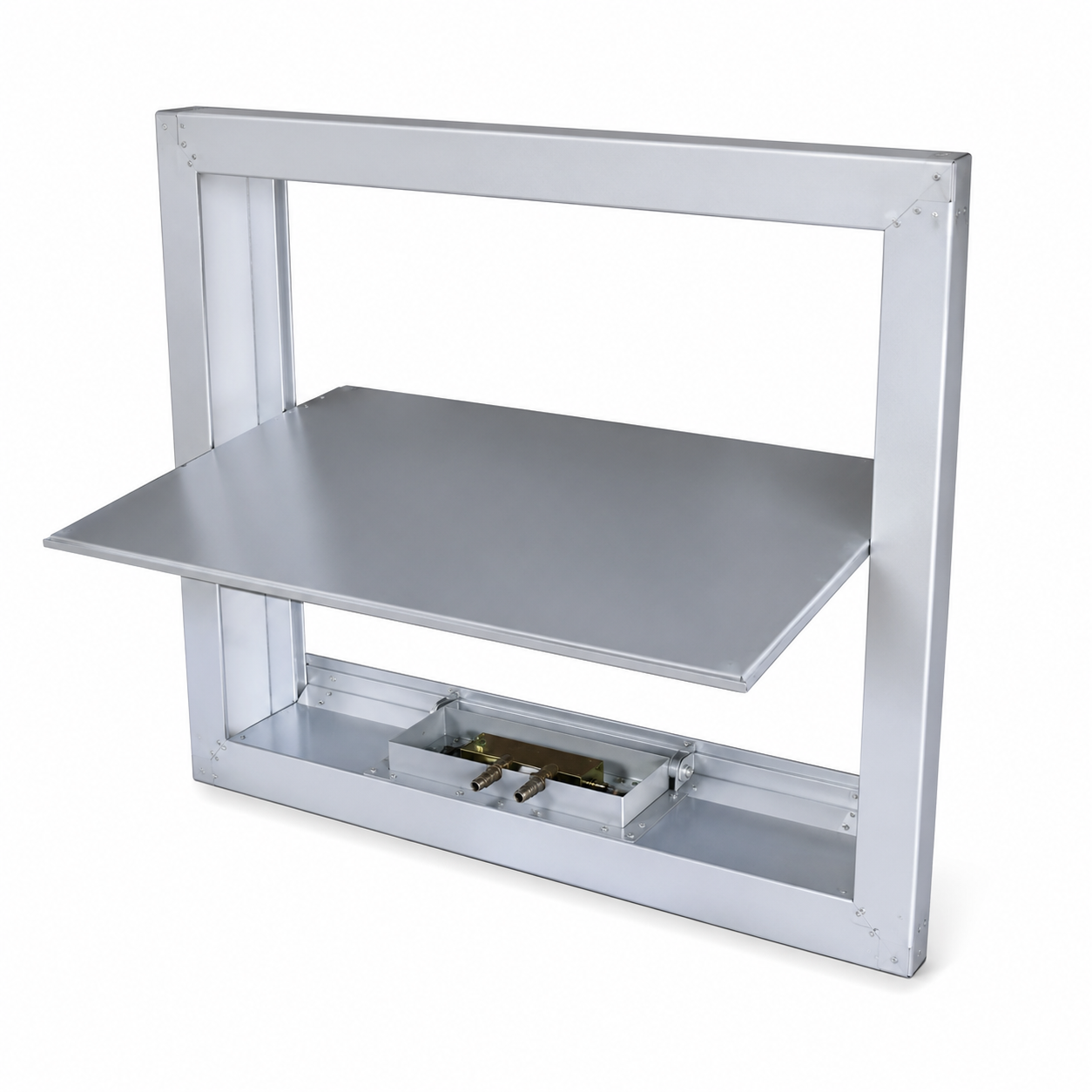
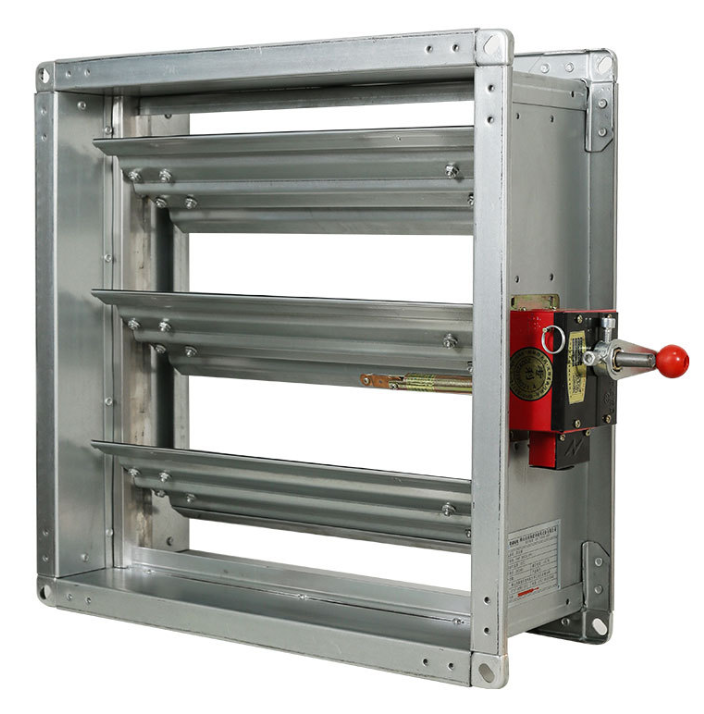
Welcome to our premium Electric Regulating Valve, designed for HVAC and ventilation systems to provide precise airflow control. The valve consists of a multi-blade damper body and an electric actuator, enabling automatic adjustment of blade angles according to control signals. It ensures accurate airflow regulation and supports intelligent building automation. With compact structure, stable performance, and flexible control options, it is widely used in central air conditioning, fresh air systems, and industrial ventilation systems.
- Overview
- Recommended Products
The Electric Regulating Valve represents a significant advancement in HVAC airflow control technology. In modern buildings, precise airflow management is essential not only for occupant comfort but also for energy efficiency and indoor air quality compliance. Traditional manual dampers require physical adjustment and cannot respond to changing conditions, while simple on-off dampers provide only binary control. The Electric Regulating Valve bridges this gap by offering continuous, automatic modulation of airflow in response to real-time system demands.
Engineering and Construction
The valve body consists of a robust multi-blade damper assembly housed within a heavy-gauge galvanized steel frame. GRAD Group selects high-quality galvanized steel for its superior corrosion resistance and structural integrity, ensuring the valve maintains its performance characteristics throughout decades of service. The blades are aerodynamically profiled to minimize pressure drop when fully open while providing tight shut-off when closed. Each blade is mounted on precision bearings that ensure smooth, friction-free rotation even under extended service conditions.
The multi-blade design offers significant advantages over single-blade configurations. Multiple blades provide more uniform airflow distribution across the duct cross-section, reducing turbulence and pressure losses. The blade interlocking mechanism ensures all blades move in unison, maintaining consistent airflow control across the entire valve face area. For applications requiring minimal leakage, GRAD Group offers an optional airtight design with blade edge seals that significantly reduce air bypass.
Electric Actuator Technology
At the heart of the Electric Regulating Valve is the electric actuator—a precision electromechanical device that translates electrical control signals into mechanical blade movement. GRAD Group offers actuators in two primary configurations: on-off (two-position) and modulating (proportional). On-off actuators are suitable for applications requiring only open or closed positions, such as changeover dampers or isolation applications. Modulating actuators provide continuous position control, enabling the valve to assume any position between fully open and fully closed.
Modulating actuators accept standard control signals—typically 0-10V DC or 4-20 mA—from building automation controllers, thermostats, or direct digital control systems. The actuator incorporates a feedback circuit that continuously monitors blade position and adjusts to maintain the commanded setting. This closed-loop control ensures accurate, repeatable positioning regardless of variations in airflow pressure or mechanical resistance.
The actuator's response time and torque output are carefully matched to the valve size and operating conditions. Spring-return actuators provide fail-safe operation by returning the valve to a predetermined position (fully open, fully closed, or a specific intermediate position) upon power loss. This fail-safe feature is critical for applications where safety or process integrity depends on the valve position during a power outage.
Control Signal and Integration
The Electric Regulating Valve supports a range of control signal options to accommodate different automation architectures. The industry-standard 0-10V DC analog signal provides proportional control, with voltage level corresponding directly to blade position. The 4-20 mA current loop signal offers enhanced immunity to electrical noise, making it suitable for installations with long control cable runs or electrically noisy environments.
For applications requiring variable airflow modulation, the valve can be paired with a duct-mounted airflow sensor and controller. This configuration enables the valve to maintain a specific airflow setpoint regardless of duct static pressure variations—a capability particularly valuable in variable air volume (VAV) systems. For integration with Building Management Systems, the valve's position feedback signal provides remote indication of actual blade position, enabling system operators to verify correct operation and troubleshoot issues from a central location.
Standards and Compliance
GRAD Group manufactures Electric Regulating Valves in accordance with international standards to ensure compatibility and performance. The valves are available in metric and imperial sizes to suit different regional requirements. Construction meets the requirements of standard HVAC ductwork, with flange patterns that match standard connecting ducting. When specified for smoke control applications, the valve can be manufactured to meet temperature classification and leakage requirements under relevant standards.
| Item | Specification |
|---|---|
| Product Type | Electric Regulating Valve |
| Frame Material | High-quality Galvanized Steel |
| Blade Material | Galvanized Steel |
| Drive Type | Electric Actuator |
| Control Mode | On/Off Type or Modulating (Optional) |
| Installation | Flange Connection |
| Sealing Type | Standard Type / Airtight Type (Optional) |
| Working Medium | Air and Non-corrosive Gas |
| Dimensions | Customizable According to Duct Size |
1. Automatic Airflow Control
The Electric Regulating Valve automatically adjusts blade angles in response to control signals, delivering precise airflow regulation without manual intervention. This automatic control ensures optimal airflow under all operating conditions, responding to changes in building occupancy, thermal loads, and ventilation requirements. The valve's proportional control capability enables smooth, continuous modulation rather than abrupt changes in airflow.
2. Intelligent Building Management System Compatibility
The Electric Regulating Valve integrates seamlessly with Building Management Systems and direct digital control networks. This compatibility enables remote monitoring, scheduling, and automated control strategies including demand-controlled ventilation, night purge, and optimal start/stop. Integration with BMS provides facility managers with comprehensive visibility into system performance and the ability to optimize operations for energy efficiency and occupant comfort.
3. Stable Performance with Reliable Actuation
Precision actuators deliver accurate, smooth blade positioning with response characteristics matched to HVAC control requirements. The actuator's feedback loop continuously monitors blade position and corrects for any deviation from the commanded setting. This closed-loop control ensures stable, repeatable performance even under varying airflow conditions. The gear train and mechanical components are engineered for extended service life with minimal maintenance.
4. Excellent Sealing and Low Leakage
For applications where air leakage cannot be tolerated, GRAD Group offers an optional airtight design with blade edge seals and frame gaskets. This configuration significantly reduces leakage rates, ensuring that airflow is controlled precisely as commanded. Low-leakage performance is essential in variable air volume systems, where uncontrolled bypass air can undermine system efficiency and comfort.
5. Durable Galvanized Steel Construction
The valve body and blades are manufactured from high-quality galvanized steel, providing robust protection against corrosion and mechanical damage. This durable construction ensures the valve maintains its performance integrity throughout the building's service life, even in environments with elevated humidity or exposure to airborne contaminants.
6. Compact Design for Easy Installation
The Electric Regulating Valve features a compact, space-efficient design that simplifies installation in constrained equipment rooms and ceiling plenums. Standard flange connections match common duct sizes and facilitate rapid mounting. Access panels provide convenient access for inspection, testing, and maintenance.
7. Customization for Project-Specific Requirements
GRAD Group offers extensive customization options for the Electric Regulating Valve. Dimensions can be tailored to fit non-standard duct sizes, while custom blade configurations can be engineered to address specific airflow and pressure drop requirements. Actuator options include various control signals, response times, and fail-safe configurations. Special coatings and materials are available for corrosive or high-temperature environments.
Commercial Buildings
Office buildings, shopping malls, hotels, and commercial complexes rely on Electric Regulating Valves to deliver variable airflow to occupied spaces. In these applications, the valves are typically installed in duct branches serving individual zones or floor areas. Demand-controlled ventilation strategies use occupancy sensors and CO₂ sensors to modulate airflow based on actual occupancy, reducing energy consumption during periods of partial occupancy while maintaining air quality when spaces are full.
Public Buildings
Hospitals, schools, airports, and exhibition centers require ventilation systems that respond to varying occupancy and operational requirements. In healthcare facilities, Electric Regulating Valves support pressure control strategies that maintain positive pressure in operating rooms and isolation rooms, preventing cross-contamination. In educational settings, valves enable fresh air delivery that meets ASHRAE Standard 62.1 ventilation requirements while optimizing energy use.
Industrial Facilities
Factories, workshops, and air handling systems in industrial environments require robust airflow control that can handle large air volumes and demanding conditions. The Electric Regulating Valve's galvanized steel construction provides the durability needed for industrial applications. In paint booths, fume exhaust systems, and process ventilation, the valve enables precise control of exhaust airflow rates to maintain worker safety and regulatory compliance.
HVAC Systems and Air Distribution
Central air conditioning systems, fresh air handling units, and air distribution networks are the primary application environments for Electric Regulating Valves. In the air handling unit, the valve controls outdoor air, return air, and exhaust air flows to maintain proper air balance and economizer operation. In the distribution network, branch valves enable zone-level airflow control and system balancing. The valve's compatibility with building automation systems facilitates integration with chiller, boiler, and fan controls for comprehensive system optimization.
Laboratory and Clean Room Environments
Pharmaceutical, semiconductor, and research laboratory facilities require precise airflow control to maintain contamination control, pressure cascades, and fume containment. Electric Regulating Valves with high-sealing performance provide the level of control precision required for these critical applications. Integration with laboratory control systems ensures that airflow responds instantly to changes in fume hood sash position, occupancy, and process requirements.
Precise Airflow Regulation
The Electric Regulating Valve's primary function is precise airflow regulation. The actuator continuously adjusts blade position to maintain the airflow rate commanded by the control system. This precision enables accurate air balancing, stable space temperature control, and consistent ventilation rates—all essential for occupant comfort and indoor air quality.
Building Management System Integration
The Electric Regulating Valve functions as a controlled device within the Building Management System architecture. It receives commands from the BMS controller and reports its position back to the central system. This integration enables facility managers to monitor system performance, implement energy-saving strategies, and respond to changing building conditions from a central location.
Variable Air Volume Support
In variable air volume systems, the Electric Regulating Valve modulates airflow to meet changing cooling or heating loads. As space loads decrease, the valve reduces airflow, lowering fan energy consumption according to the affinity laws. This demand-based control can reduce fan energy consumption by 30-50% compared to constant volume systems.
Outdoor Air Economizer Control
The Electric Regulating Valve controls outdoor air intake in air handling units with economizer capability. When outdoor conditions are favorable (cool and dry), the valve modulates to increase outdoor air intake, reducing mechanical cooling requirements. This free-cooling function can significantly reduce annual energy consumption in many climate zones.
Pressure-Independent Control
When paired with an airflow measuring station and controller, the Electric Regulating Valve can function as a pressure-independent control device. The controller adjusts the valve position to maintain a constant airflow setpoint regardless of duct static pressure changes. This capability ensures stable airflow delivery even when other dampers in the system are modulating.
Fail-Safe Positioning
Electric Regulating Valves with spring-return actuators provide fail-safe positioning upon power loss. This function is critical for applications where safety, process integrity, or equipment protection depends on the valve position during an outage. Typical configurations include fail-open for cooling applications where airflow is required to prevent overheating, and fail-closed for applications where uncontrolled airflow could cause damage or safety issues.
Q: What is the difference between electric and manual regulating valves?
A: Electric valves provide automatic and remote control, while manual valves require manual adjustment.
Q: Can it be controlled remotely?
A: Yes. It can be integrated into BMS systems for remote operation.
Q: Are custom sizes available?
A: Yes. Products can be customized according to duct dimensions and project requirements.
Q: Is an airtight version available?
A: Yes. Both standard and airtight options are available.
Q: What systems is it used in?
A: It is widely used in HVAC, fresh air systems, and industrial ventilation systems.
Q: Do you provide technical support?
A: Yes. We provide product selection, installation guidance, and full after-sales support.