 EN
EN
Constant Air Volume Valve
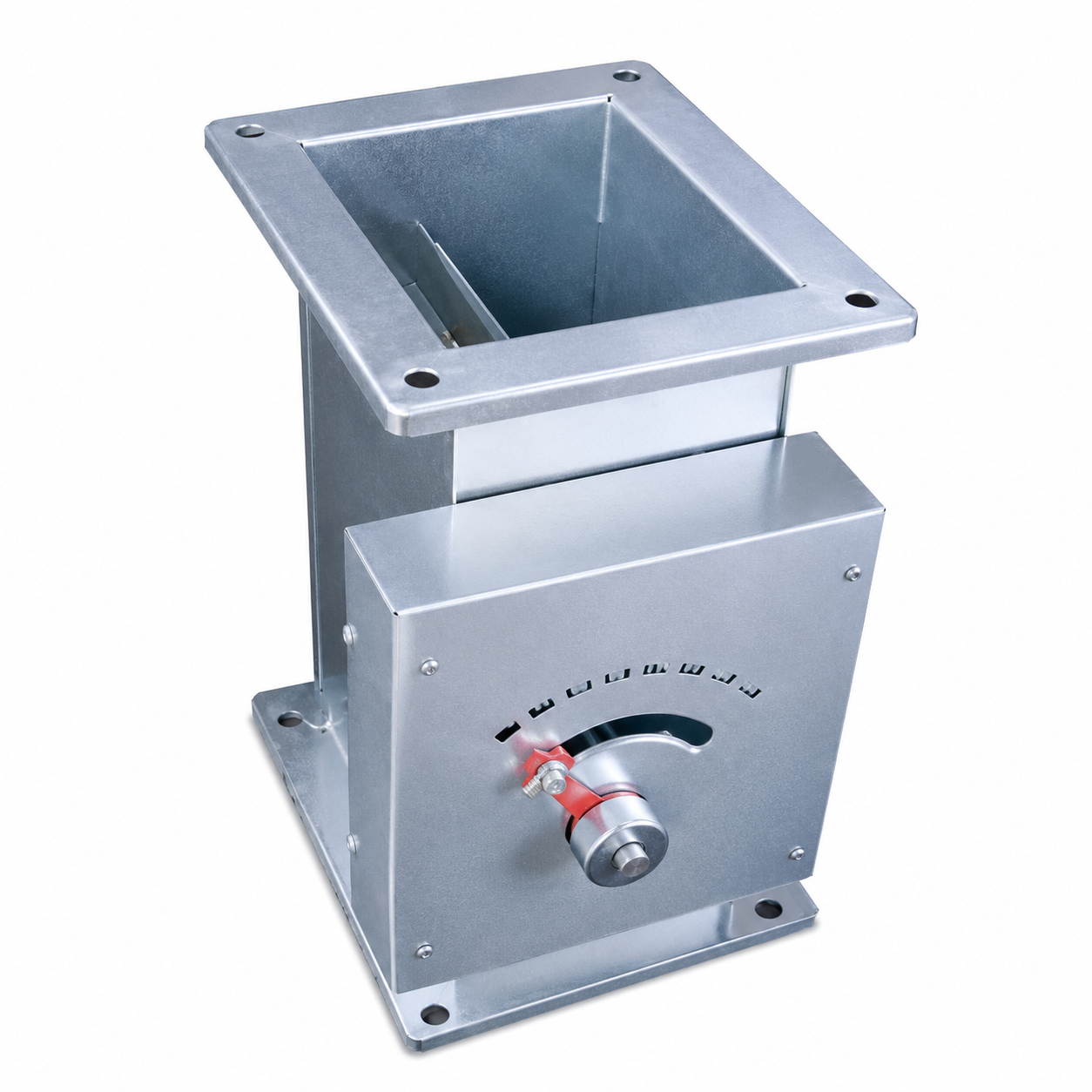
Welcome to our premium Constant Air Volume Valve, a mechanical self-operated airflow control device designed for HVAC and ventilation systems requiring stable airflow regulation. The valve operates without external power, utilizing duct pressure changes to automatically adjust the blade position, ensuring a constant air volume output under varying system pressures. With compact structure, precise control, stable performance, and easy installation, it is widely used in commercial buildings, hospitals, laboratories, clean rooms, and industrial ventilation systems.
- Overview
- Recommended Products
The Constant Air Volume Valve addresses one of the most persistent challenges in HVAC system design: maintaining stable airflow in the face of changing duct pressures. In real-world ventilation systems, pressures fluctuate constantly—filters load, dampers modulate, fans cycle, and variable air volume boxes open and close. These pressure changes cause conventional fixed-position dampers to deliver varying airflow, undermining system balance and comfort. The Constant Air Volume Valve solves this problem through an ingenious mechanical mechanism that automatically adjusts to maintain constant airflow, independent of pressure variations.
Operating Principle
The Constant Air Volume Valve operates on a fundamentally simple yet highly effective mechanical principle. The valve incorporates a sensing element—typically a diaphragm, bellows, or spring-loaded vane—that responds to the differential pressure across the valve. As duct pressure increases, the sensing element detects the change and moves a control linkage that partially closes the damper blades, increasing resistance and maintaining the preset airflow. Conversely, when duct pressure drops, the sensing element allows the blades to open further, reducing resistance and maintaining the airflow setpoint.
This self-regulating mechanism creates a stable airflow output across a defined pressure range, typically from 100 Pa to 1,000 Pa or broader depending on the specific design. Within this operating range, airflow remains within ±5% of the setpoint—a level of precision that matches or exceeds many electronically controlled systems. The mechanical nature of the control means there is no need for power wiring, control signals, or electronic controllers, significantly reducing installation complexity and cost.
Engineering and Construction
GRAD Group manufactures the Constant Air Volume Valve using high-quality galvanized steel for the body and blades, ensuring excellent corrosion resistance and structural integrity. The damper blades are aerodynamically profiled to minimize pressure drop when fully open while providing the necessary resistance characteristics for accurate control. Precision bearings support the blade shafts, ensuring smooth, friction-free operation throughout the valve's service life.
The internal sensing mechanism is engineered for durability and accuracy. Moving parts are manufactured from corrosion-resistant materials and are factory-calibrated to ensure precise response to pressure changes. The calibration process involves testing the valve across its specified pressure range to verify airflow accuracy, with each unit adjusted to meet the specified setpoint tolerance.
Airflow Range and Sizing
The Constant Air Volume Valve is available in a wide range of sizes and airflow capacities to suit diverse applications. Standard sizes typically range from 100 mm to 630 mm diameter or equivalent rectangular dimensions, with airflow setpoints from as low as 50 L/s to over 2,000 L/s. Custom setpoints within each valve's operating range can be factory-preset or field-adjusted using an external adjustment mechanism. The valve's size is selected based on the required airflow setpoint, available duct pressure, and acceptable noise level.
For rectangular applications, GRAD Group offers valves in standard modular sizes that match common duct dimensions. Custom sizes can be manufactured for projects with non-standard requirements. The valve's compact design—typically shorter than equivalent electronic pressure-independent valves—facilitates installation in tight spaces.
Comparison with Electronically Controlled Alternatives
The Constant Air Volume Valve offers distinct advantages compared to electronically controlled pressure-independent valves. While electronic valves provide precise control and integration capabilities, they require power supply, control wiring, and calibration equipment—all of which increase first cost and complexity. The mechanical CAV valve eliminates these requirements entirely, offering a simpler, more cost-effective solution for applications where BMS integration is not required or where simplicity and reliability are paramount.
For small to medium-sized projects, the Constant Air Volume Valve often provides the optimal balance of performance, cost, and reliability. The absence of electronic components means there are no control signal compatibility issues, no wiring costs, and no concerns about electromagnetic interference. The valve's performance is inherently independent of the building automation system, providing stable airflow even during control system outages.
| Item | Parameter Details |
|---|---|
| Product Type | Constant Air Volume Valve |
| Control Method | Mechanical Self-operated Control |
| Drive Type | Air-driven, No Power Required |
| Frame Material | High-quality Galvanized Steel |
| Internal Structure | Constant Airflow Regulation Mechanism |
| Installation | Flange Connection |
| Control Accuracy | High-precision Airflow Control |
| Working Medium | Air and Non-corrosive Gas |
| Dimensions | Customizable according to duct size |
1. Constant Airflow Control Without External Power
The Constant Air Volume Valve maintains stable airflow output automatically, responding to system pressure changes without requiring any external power supply. This self-powered operation eliminates the need for electrical connections, control wiring, and power distribution—significantly reducing installation costs and complexity. The valve's mechanical control mechanism ensures continuous, reliable operation regardless of electrical system availability.
2. Pressure-Independent Performance
The valve's sensing mechanism provides true pressure-independent airflow control. Within the specified operating pressure range, the valve automatically adjusts its position to maintain the setpoint airflow, regardless of upstream or downstream pressure changes. This pressure independence ensures stable ventilation rates, consistent space pressurization, and reliable system performance.
3. Precision Mechanical Control
The sensing and actuation mechanism delivers airflow control accuracy within ±5% of setpoint across the specified pressure range. This precision matches or exceeds many electrically actuated systems, while the purely mechanical design eliminates the drift and calibration drift that can affect electronic sensors and actuators over time. Factory calibration ensures immediate, accurate performance upon installation.
4. No Power Supply Required
The Constant Air Volume Valve operates entirely through mechanical means, requiring no electrical power for sensing or actuation. This feature is particularly valuable in applications where power availability is limited or where the installation cost of electrical connections is prohibitive. The absence of electrical components also eliminates the risk of electrical failure or control signal interference.
5. Durable Galvanized Steel Construction
Manufactured from high-quality galvanized steel, the Constant Air Volume Valve provides exceptional durability and corrosion resistance. This robust construction ensures reliable performance even in demanding environments, including industrial facilities, coastal locations, and areas with elevated humidity. The galvanized coating protects against rust and degradation, ensuring the valve maintains its performance characteristics for decades.
6. Compact and Space-Efficient Design
The valve's compact design minimizes space requirements, facilitating installation in constrained equipment rooms, ceiling plenums, and tight duct runs. The reduced length compared to electronic alternatives allows installation in spaces where longer valves would not fit. This space efficiency is particularly valuable in retrofit applications where existing space is limited.
7. Quick Installation with Standard Connections
Standard flange connections matching common duct sizes simplify installation and reduce labor costs. The valve can be quickly bolted into ductwork systems using standard tools and hardware. Access panels provide easy access for inspection and adjustment when required.
8. Adjustment and Customization
The airflow setpoint can be adjusted using an external adjustment mechanism, allowing on-site changes to accommodate modified system requirements. GRAD Group offers extensive customization options, including custom airflow setpoints, non-standard dimensions, special blade configurations, and alternate materials for corrosive or high-temperature environments. Custom pressure ranges are also available for applications falling outside standard specifications.
Commercial Buildings
Office buildings, shopping centers, hotels, and mixed-use developments benefit from the Constant Air Volume Valve's ability to maintain stable airflow without complex control systems. In these applications, the valve is typically installed in branch ducts serving individual tenant spaces, conference rooms, or zones where constant ventilation is required. The self-powered operation eliminates the need for control wiring to each branch, simplifying system design and reducing installed cost. The valve's pressure-independent performance ensures each space receives its designated airflow regardless of variations in total system flow caused by VAV box modulation or filter loading.
Healthcare Facilities
Hospitals, clinics, and medical research laboratories demand precise airflow control to maintain pressure relationships, infection control, and patient safety. The Constant Air Volume Valve's stable airflow delivery is ideal for critical applications such as isolation rooms (negative pressure relative to corridors), operating rooms (positive pressure), and protective environment rooms (positive pressure for immunocompromised patients). In these applications, the valve provides the dependable airflow essential for maintaining proper pressure cascades without the complexity and cost of electronic controls. The absence of electrical components also reduces the risk of electrical sparks in potentially hazardous locations.
Laboratories and Clean Rooms
Pharmaceutical manufacturing, semiconductor fabrication, and research laboratories require precise airflow control to maintain cleanliness, contamination control, and personnel safety. The Constant Air Volume Valve provides the stable, predictable airflow essential for maintaining clean room classifications and fume hood performance. In clean room applications, the valve ensures consistent air change rates, preventing the build-up of airborne particles and maintaining the required cleanliness levels. In laboratory settings, the valve supports fume hood exhaust systems by maintaining constant exhaust airflow regardless of duct pressure variations.
Educational and Institutional Facilities
Schools, universities, and research institutions require ventilation systems that maintain stable airflow for indoor air quality and thermal comfort. The Constant Air Volume Valve provides cost-effective airflow control for classrooms, lecture halls, and laboratory spaces. The valve's simplicity and reliability reduce maintenance requirements and minimize system downtime—important considerations for institutions with limited maintenance resources.
Industrial Facilities
Factories, warehouses, and production environments often have demanding ventilation requirements that must be met reliably and cost-effectively. The Constant Air Volume Valve's robust construction and mechanical operation make it well-suited for industrial applications where electronic controls might be affected by dust, vibration, or electromagnetic interference. In dust collection systems and process ventilation, the valve's pressure-independent performance ensures consistent exhaust rates regardless of filter loading or other system changes.
Special Environments
The Constant Air Volume Valve finds application in a range of specialized environments where power availability or reliability is a concern. In unstaffed remote facilities, hazardous locations, and explosive atmospheres, the valve's purely mechanical operation eliminates the risk of electrical sparks and ignition. In seismic zones, the valve's simple construction and absence of electronic components reduce the risk of damage and failure during seismic events.
Stable Airflow Regulation
The Constant Air Volume Valve's primary function is to maintain a stable, preset airflow rate regardless of fluctuations in duct pressure. The valve accomplishes this through its self-regulating mechanism, which senses pressure changes and adjusts blade position accordingly. This function ensures that each zone served by the valve receives its designated airflow, maintaining ventilation rates, space pressurization, and thermal comfort.
Pressure-Compensating Airflow Control
The valve continuously compensates for pressure changes in the duct system. As total system pressure rises or falls due to VAV box operation, fan modulation, or filter loading, the valve's sensing mechanism responds immediately, adjusting its position to maintain airflow. This pressure-compensating function ensures that airflow remains stable even as the system operating point shifts.
Air Balance Support
In constant air volume systems, the Constant Air Volume Valve supports system air balancing by establishing and maintaining design airflow rates. Once set, the valve maintains its airflow setpoint without requiring ongoing balancing or adjustment. In variable air volume systems, the valve provides a stable airflow reference for critical zones, preventing the under-ventilation that can occur when VAV systems operate at low total flow.
Zone Pressurization Control
The Constant Air Volume Valve supports zone pressurization control by maintaining stable airflow into or out of spaces. In positive pressure applications, the valve's constant supply airflow maintains the required overpressure relative to adjacent spaces. In negative pressure applications, the valve's constant exhaust airflow maintains the required underpressure for containment.
Indoor Air Quality Support
By maintaining stable ventilation rates, the Constant Air Volume Valve supports indoor air quality by ensuring consistent outdoor air delivery to occupied spaces. This function is essential for maintaining acceptable CO₂ levels, diluting indoor pollutants, and supporting occupant health and productivity.
Q: Does the constant air volume valve require power?
A: No. It is a fully mechanical self-operated device without electrical power.
Q: How does it maintain constant airflow?
A: It automatically adjusts blade position based on duct pressure changes.
Q: Can airflow ranges be customized?
A: Yes. Airflow range and dimensions can be customized according to project requirements.
Q: Where is it commonly used?
A: It is widely used in HVAC systems, clean rooms, laboratories, and industrial ventilation systems.
Q: Is installation complicated?
A: No. Standard flange connection ensures easy installation.
Q: Do you provide technical support?
A: Yes. We provide product selection, installation guidance, and after-sales technical support.